Mar
15

There is no cheese that I enjoy more than high quality, handmade ricotta. For years I poo-poo’d it because all I had ever tasted was the shelf stable, strangely homogeneous, fairly tasteless, mass-produced grocery store variety. And then a few years ago I had a ricotta epiphany! My friend Nora (the Cheesemonger at The Kitchn and food expert extraordinaire) introduced me to artisan handmade ricotta from Saxelby Cheesemonger in the Essex Market in NYC. Creamy, wonderfully textured, subtly yet richly flavored, I was smitten from my first bite to my last.
Since then I’ve searched out artisan ricotta, and it’s harder to find than one would hope. Call me picky, but in SF, THE city of foodies, the only ricotta I have found that I really love is Bellwether Farms ricotta. They make a cow milk and sheep milk version, and both are delicious. Unfortunately, only a handful of shops carry the cheese (none of which are my regular grocery stores), and the cheese turns sour if left for more than a few days. How disappointing it is to be excitedly looking forward to the last few bites of perfectly textured, creamy ricotta, only to open the container and smell a sour aroma…
I have tried making ricotta before, using whole milk and lemon juice as the coagulant, but I found the taste to be a little strange, and the texture too dry and spongy… The whole experiment was a bit of a bust, and I sort of gave up on the idea of homemade ricotta. That is, until I saw this article over at the Kitchn describing fresh buttermilk cheese. Though it’s decidedly not ricotta, it seemed like something I would enjoy (and it’s absurdly easy to make), so one night after work last week I decided to make cheese.
And the result? Absolutely fantastic. It has that elusive and wonderful texture only found in high quality ricottas, and the flavor is great — subtle, not too rich, with just a slight tang, and lots of character. The lemon and thyme add a nice touch, though on its own or with another simple seasoning (black pepper, tarragon, even lavender perhaps), the cheese would be delicious.
I took Nora’s advice and crumbled about 1/4 cup into scrambled eggs, and they were divine! Spooned over some crunchy toast, it could be my new favorite breakfast…
Thyme and Lemon Fresh Buttermilk Cheese
Adapted from From Nora Singley’s Cheesemonger column
1 qt. whole milk
1 1/2 c. buttermilk
2 t. coarse sea salt
1-2 t. fresh thyme, minced
1 t. lemon zest
Line a colander or strainer with either a cotton handkerchief or 3 pieces of cheesecloth that have been cut into 12 inch squares. Set colander in sink or over a large bowl.
Combine milk, buttermilk, salt, thyme, and lemon zest in a large heavy-bottomed saucepan, and heat over medium-high heat until mixture has separated into white curds and translucent whey, about 8 minutes. If using low-fat buttermilk, separation occurs at about 180 degrees and the curds will clump together readily. If using whole buttermilk, separation occurs closer to the boiling point, about 212 degrees, and the curds are finer-grained. When using whole buttermilk, let curds and whey stand off heat for about 3 minutes after separation, so the curds cling together and facilitate the straining step.)
Ladle the contents of the saucepan into the prepared colander. Let the whey drain, 1 to 2 minutes. Lift the four corners of the cheesecloth and gather them together.
Gently twist the gathered cloth over the cheese and press out any excess whey. Do not squeeze out too much liquid of the cheese will be dry and grainy.
Serve unwrapped cheese warm on French bread, drizzled with olive oil and seasoned with salt.

Heat milk, buttermilk, lemon and thyme

Cook until curds and whey separate

Ladle curds into a lined strainer

Drain and squeeze
::
4 Comments
Feb
22

Here it is, the end of Dungeness crab season and I am *finally* getting around to posting this delicious roasted crab recipe… don’t walk… RUN to get the last of the dungeness before it is gone! Tender, sweet, and oh so sustainable, dungeness crab is one of my favorite wintertime treats.
Typically when preparing crab, I opt for a very simple preparation — I warm the crab in a steamer then make a lemon butter sauce for dipping — simple and delicious. But, sometimes it’s fun to be adventurous and try an unexpected combination. Enter Ms. Shafia’s Roasted Crab with Fennel and Orange.
I first came across Louisa Shafia’s new cookbook Lucid Food
while perusing the latest 10 Speed Press offerings. With regards to cookbooks, they are tops. A large percentage of my favorite cookbooks are published by 10 Speed Press (Super Natural Cooking, Asian Dumplings, Fat: A Misunderstood Ingredient, The River Cottage Meat Book, and the whole Moosewood series, to name a few…). So, I guess it is no surprise that I am really enjoying this latest publication that has recipes ranging from down home american to out there asian interpretations (ginko nut dumplings with foraged ginkos!) to persian delicacies.
Anyhow, this cookbook is really lovely. In its layout, it reminds me a bit of Heidi Swanson’s Super Natural Cooking (read: beautiful pictures, nice typography, overall beautiful layout), though the recipes have a focus on omnivorous eco-concious cooking instead of vegetarian cuisine. It is divided by season, and stresses the use of locally available seasonal ingredients.
Some of the other recipes on my to-cook list are (mostly from the Fall and Winter sections… Summer seems too far away to read the chapter yet!):
- Buckwheat Crepes with Mashed Potatoes and Jack Cheese
- Amaranth Porridge with Fruit and Nuts
- Kale Salad with Avocado, Almonds, and Toasted Nori
- Pan-Roasted Portobello Mushrooms with Mashed Parsnips
- Red Cabbage, Apple, and Dulse Salad
- Fesenjan (Chicken in Pomegranate Walnut Sauce)
- Fava Beans and Seared Zucchini with Garlicky Croutons
- Rhubarb and Pistachios over Thick Yogurt
Speaking of those foraged ginkos, I’ve noticed quite a few elderberry trees coming into bloom near my office. Anyone have plans to make any elderflower creations?
Oven-Roasted Dungeness Crab with Fennel and Orange
Adapted from Lucid Food
by Louisa Shafia
Serves 2
2 garlic cloves, minced
1/4 c. olive oil
2 T. dijon mustard
1/2 an orange, zested, then cut into supremes
10 sprigs fresh thyme
1 dungeness crab, cooked, cleaned, cracked, and split into halves or pieces
1 small shallot
1 small fennel bulb, trimmed and thinly sliced
3/4 c. dry white wine
1/4 c. orange juice
salt and pepper
1/2 lemon, quartered
Whisk together the garlic, 3 T. of the olive oil, the mustard, and orange zest. Toss in 6 of the thyme sprigs. Place crabs in a shallow baking dish and smear the garlic mixture all over them, working it into the cracks in the shell. Set aside in the refrigerator.
Preheat the oven to 425 F.
Heat a large ovenproof saute pan over medium-high heat and add the remaining 1 T. olive oil. Add the shallot and saute for 1 minute. Add the fennel and the rest of the thyme and saute for 1 minute. Pour in the wine and orange juice and bring to a boil. Add salt to taste, decrease the heat, and simmer for 5 minutes. Uncover and simmer for about 5 more minutes.
Add the crab and all of the marinade to the pan and bring to a boil. Taste the sauce and season as needed. Cover the pan and put it in the oven for 5 minutes. Baste the crab with the sauce and roast for 5 minutes more. Take the pan out of the oven and carefully pour the sauce through a large strainer into a bowl. Cover the crab to keep it warm.
Pour the sauce into a small saucepan and bring it to a boil. Reduce the sauce, stirring often, for 4 minutes. Turn off the heat and whisk in the butter. To serve, divide the crab among the plates. Pour the sauce over the crab and season with pepper. Garnish with orange slices and a lemon quarter. Serve with crusty bread and a tender green salad. Enjoy!
::
Leave a Comment
Jan
25

For a blog named after beets, it’s been far too long since I featured a recipe based on my favorite root vegetable.
The occasion for these beets was a vegetarian dinner we hosted last weekend. Oddly, I find it easier to plan and prepare a menu with constraints such as no meat or no dairy than one in which the whole food palette is available. Perhaps it’s the same reason I love CSAs… when dealing with a limited set of ingredients, I tend to be more creative and adventurous with the foods I prepare. There is a similar practice for musicians. Musicians will deliberately put themselves in situations where making music is really the only thing to do, with few distractions and where supreme boredom is a looming possibility, i.e. move to a mountain cabin for 3-4 months. The only thing to do is to make music. Period. Some of the best music in history is a result of people enforcing constraints on themselves.
Anyhow, when I made these beets last weekend they were but one component of three in a salad from David Tanis’ book A Platter of Figs
. I first saw the cookbook back in 2008 when I went to Chez Panisse for the first time (Thank You Alisha!). The cookbook had just been released, and Tanis, a chef for half of the year at Chez Panisse, was preparing menus in the vein of his new book. The meal was simply amazing, and is something I will remember for many, many years to come. I had been meaning to pick up the cookbook ever since, but this Christmas I received it as a very thoughtful gift, and since then have read it cover to cover. It is simply lovely. It is menu based, and embodies so many wonderful ideas about entertaining. Each menu is a collection of 3-7 recipes (or non-recipes, depending on who you ask… is a platter of figs a recipe?). Each is designed to be served at a dinner among friends, 8-10 people or so. Tanis presents a few simple but compelling ideas related to entertaining:
- – A gathering flows similarly to how a menu flows — plan it thoughtfully
- – When serving food, serve it on family style platters rather than individually plating everything. It makes the experience more intimate.
- – When hosting a dinner party, the focus is people and friendship. Food may compliment this, but it shouldn’t be the absolute focus. With this in mind, favor simplicity, seasonality, and quality ingredients to make simple, delicious food
When the party was over and I was cleaning up, I separated the prepared salad into its’ components — beets, eggs, and watercress — since I figured they would keep better separately than in one big massive container. Then next morning I tasted the beets on their own and thought to myself, these are so delicious! Slightly pickled, sweet, earthy, and just a hint of mustard… since then I have been eating them on their own and loving it… on top of ricotta spread over rye, mixed with chopped egg as a pink take on egg salad, and plain spoonfuls straight out of the refrigerator whenever I feel the urge.
Whether on their own or atop a watercress salad as David Tanis originally envisioned it, these beets are superbly delicious and quite simple to prepare. A beet lover will fall more deeply in love, and the beet averse will perhaps give the underrated vegetable a second thought. Enjoy them thoroughly, and keep in mind David Tanis’ idea that entertaining is a joy to be shared and celebrated.
Enjoy!
David Tanis’ Beets
Adapted from A Platter of Figs
6 medium beets, greens removed, scrubbed clean
2 large shallots, finely diced
2 T. red wine vinegar
1 T. white wine vinegar
salt and pepper
1 T. dijon mustard
1/4 c. extra virgin olive oil
2 t. grated orange zest
a squeeze of orange juice (optional)
Preheat the oven to 350. Place the beets in a roasting pan with about an inch of water. Bake, covered, for an hour, or until the beets are easily pierced with a fork. Slip off the skins while the beets are still warm. Roasted beets will keep for 2 or 3 days in the refrigerator.To make the vinaigrette, macerate the diced shallots in a bowl with the vinegars and a good pinch of salt for 10 minutes. Stir in the mustard until dissolved. Whisk in the olive oil, add the orange zest, and grind in some pepper. Squeeze in some orange juice if desired. Taste and adjust for acid and salt. The dressing should be somewhat tart so add more red wine vinegar if necessary.
Dice the beets into roughly 1/2 inch cubes. Place the beets in a bowl and season with salt and pepper. Whisk the vinaigrette and pour it over the beets. Toss the beets in the dressing. Enjoy!
Note: David Tanis’ original recipe is Watercress, Beet, and Egg Salad. To make this, simply spread about three bunches of cleaned, trimmed watercress over a platter. Scatter the beets over the watercress, then garnish the salad with 6 hard-boiled eggs that have been cut into quarters. This is also supremely delicious!
::
9 Comments
Jan
7

Yesterday I inaugurated my new canning equipment — a huge 12 quart stockpot, a canning funnel, a magnetic lid lifter, and a bright red rubber coated jar lifter. Joy! Granted, I actually received most of this for Christmas last year, but since I didn’t envision myself doing much canning in Germany, I packed everything away in storage and forgot about it for a year.
But, now I am back in San Francisco and getting settled into ‘life as normal’, whatever that means. One of the things that signifies ‘life as normal’ is being settled enough that I feel like embarking on culinary adventures. Homemade tofu, jelly, pickles, sauerkraut, tempeh, and sausage are the sorts of things I am talking about here — things you can easily buy at the grocery store, but sometimes are just fun to make from scratch because 1) seeing the process is interesting, and 2) the results are often more unique and flavorful than their store bought counterparts. When things are up in the air or unsettled, the farthest thing from my mind is making something like tofu from scratch, but I can tell when I have finally settled in somewhere because I typically develop the urge to make sausage, pickle something, or cook up some marmalade.
Such is the case now… finally! sigh of relief that our move is over…
This recipe is adapted from Christine Ferber’s beautiful and imaginative book, Mes Confitures
. Divided by season, this volume focused entirely on unusual preserves and jellies is the jam maker’s dream. There are SO many things I want to try out of here. Judging from the fantastic results of my first foray into her book, I expect great things from her other recipes. A few of the standouts that I plan to make are: Pineapple with Vanilla and Rosemary, Banana with Bittersweet Chocolate, Clementine with Lemon and Cinnamon, Kumquat with Apple and Grapefruit, and Praline Milk Jam to name a very few (and these are just from the ‘Winter’ section!).
This both is and is not a great book for beginners — to me it feels a little like reading through a grandmother’s notes — scant detail, few instructions regarding proper sterilization methods, no tips on how to tell when the jam is set, etc.– but on the other hand it has so many wonderful and imaginative recipes that are sure to inspire the beginning preserver. Also, there is no packaged pectin to be found in any of her recipes! For low pectin fruits, Ms. Ferber calls for the addition of green apples or pectin-rich homemade Green Apple Jelly. I really like this aspect of the book, as I have always felt a little put off by those strange little packages of powdered pectin one buys at the grocery store. Call me crazy and old-fashioned, but they just don’t feel natural to me. Her approach is truly ‘from scratch’, and instead of being daunting, I think it actually demystifies the whole process of making preserves (i.e. no magic powders…)
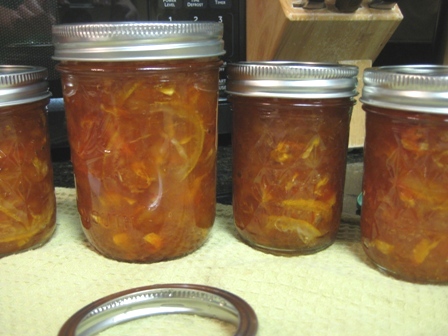
Anyhow, these preserves of orange, pomelo, lemon, and ginger are a wonderful mixture of sweet, bitter, sour, and spicy. So far my favorite thing to do with it is stir it into plain yogurt. It’s also tasty on toast or stirred into oatmeal. Ms. Ferber recommends mixing these preserves into fromage blanc, which I am sure would be delicious as well. As with so many things, the final result depends heavily on the quality of the ingredients you use. Citrus is in prime season right now, so try to buy the ingredients at your local farmer’s market. You will get fruit that is flavorful, perfectly ripe, and truly in season.
Do you make preserves? do you have any favorite recipes? I’d love to hear them.

Essential ingredients: citrus and sugar

Bring mixture to a boil, then refrigerate several hours

Notice the foamy bubbles — these preserves are not set yet

See how the bubbles have changed? They are less foamy now. These preserves are nearly set (set point is ~220 degrees F)
Orange, Pomelo, Lemon and Ginger Preserves
Adapted from Christine Ferber’s Mes Confitures
makes a scant 6 cups
1 3/4 lb oranges (800 g), or 1 lb 2 oz (500g) net (cara-cara oranges are delicious here)
2 lb pomelos, or 1 lb 2 oz (500g) net (or substitute grapefruits to follow Ms. Ferber’s original recipe)
2 lemons
3 3/4 c. (800 g) sugar
11 oz (300g) candied ginger, finely chopped
Peel the oranges and pomelo, removing all the white with the rind. Slice the fruit into rounds a little less than 1/2 inch thick. Remove the seeds and cut the slices into quarters. Rinse and brush the lemons under cold water and cut them in very thin slices, removing the seeds as you go. In a preserving pan (5 qt is a good size), combine the citrus fruits, sugar, and ginger. Bring to a simmer, then turn the preparation into a bowl. Cover with a round of parchment paper and refrigerate for at least 6 hours or overnight.
Pour the mixture into a preserving pan and bring to a boil, stirring gently. Skim and continue cooking on high heat for 5-10 minutes, stirring continuously. Check the set. Put the jam into jars immediately and seal.
This post is part of Food Renegade’s Fight Back Fridays!
::
12 Comments
Nov
30

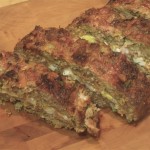
A mini dish of cabbage gratin — Not the greatest picture, but still tasty!
One of the best parts of my recent move has been unpacking the multiple boxes of cookbooks that I sealed up and put into storage before leaving for Germany. At the time I thought I was putting my “second tier” books into storage — my favorite 15 or so I shipped to Germany — but much to my delight, in every box I have found at least 2 or 3 that I have pulled out and thought, “what a great cookbook! I really missed having this!”
All About Braising
by Molly Stevens certainly falls into this category. I can’t remember why I didn’t take it with me in the first place, but I’m guessing it has to do with the fact that I had never made anything from it before moving day. I am quite glad I didn’t take it though, because it means I have it to read now! And what a read it is — in the past week I’ve made two dishes from it (<– I rarely cook from the same cookbook twice in such a short period), and both have been fantastic (the recipe above and Red Pine Chicken if you happen to have your own copy). I also have plans for about 15 more recipes, including Spicy Broccoli Rabe with Arugula, Turkey Thighs with Onions and Buttercup Squash, Sweet Braised Scallions, and Chengdu Pork to name a few.
About this specific recipe, it is really wonderful — not too heavy, rich, earthy, and the oh the cheese! Ms. Stevens suggests using a specific triple-cream cheese, Saint-Marcellin, which I had never heard of before making this. Luckily for me, Whole Foods carries it, and I was able to pick up a perfectly ripe specimen ($7.99 for a 3 oz round). After tasting it, I can see why she recommends it — Saint-Marcellin has a wonderful pungency not typical of the triple-cream cheeses I’ve had in the past. You can’t really smell it, but when you taste it it has a distinct, wonderful stinkiness. It is really worth seeking out, but if you can’t find it any robust triple cream cheese will be fine (though you should avoid the more mild cheeses like Brie — it doesn’t have enough body to stand up to the cabbage).
So, what is the lesson of this post? Revisit some of your old cookbooks! I bet you will be surprised and delighted with what you find!
Savoy Cabbage Gratin with Saint-Marcellin
From All About Braising
by Molly Stevens
3 T. butter
1 head savoy cabbage (about 1 1/2 lbs), quartered, cored, and sliced into 1/2 inch wide shreds
1 bunch scallions, white and green parts, sliced into 1/2 inch-wide pieces
salt and pepper
1 1/4 c. chicken stock
1 ripe Saint-Marcellin cheese (about 3 oz) (substitute a good triple-cream cheese such as Brillat-Savarin, Saint Andre, Explorateur, etc)
Preheat the oven to 350 degrees. Butter a large gratin dish.
In a large skillet, melt the butter over medium-high heat. Add the cabbage and scallions, season with salt and pepper, and saute, stirring ofen until the cabbage is just beginning to brown, 10-12 minutes. Pour in the stock, bring to a steady simmer, scraping the bottom of the pan, and cook for about 2 mintues.
Scrape the cabbage mixture and all its juices into the gratin dish. Cover tightly with foil then place in the oven and bake for 45 minutes. Remove the foil and contine to cook until the liquid is mostly evaporated, another 20 minutes or so.
Cut or tear the cheese into small lumps and scatter across the gratin. Increase oven temperature to 375 and cook until the cheese is thoroughly melted, about 10 minutes. Serve hot or warm as a first course, side dish, or on its own as a light supper. Enjoy!
::
5 Comments
Nov
25

Dandelion Greens, Photo courtesy of Mariquita Farms that runs a fantastic CSA (March -Nov) and also offers $25 “mystery boxes” through the winter
Dandelions’ adaptability makes them one of my favorite cooking greens. They are tasty raw (or perhaps slightly wilted with a warm bacon vinaigrette), lightly sauteed with some hot pepper flakes, or slow cooked southern style, braised for hours with a smokey ham hock. They are one of the few greens that are both delicate and bold at the same time — their strong slightly bitter taste is offset by their delicate texture, making them supremely well-rounded. Young swiss chard sometimes falls into this category, but overall dandelions are in a category of their own.
I feel a bit “off” in my seasonality as of late. Between the international move, massive amounts of work, and hosting out of town guests, I haven’t visited the farmer’s market in nearly a month. I am having a hard time remembering if dandelion greens are typically available year round or only during the spring. The bunch I bought from Whole Foods was lush and fresh looking, but to be honest, I have no idea where it came from — California, Peru, Turkey, Mexico — something that is usually an important factor to me in my food shopping. Though I am a bit critical of myself for not knowing this information, part of me says that this is just one of those times when as my sister says, “people need to live their lives”. It’s important to keep food issues in the forefront of one’s mind and work towards a more ecologically sustainable system, but it’s also important that one not become obsessed and single-minded and miss the joy of a caringly prepared dish, even if out of season.
But hold on a minute while I put my soap box away on the other side of the room…
This gratin comes together in no time, and the simplicity of its ingredients belies its complex taste. The secret ingredient here is the nutmeg — not enough and the dish is a bit flat, but add too much and that’s all you taste. Err on the side of too little, and sprinkle a bit over the top as a garnish if you feel like it is missing something. It’s a particularly nice dish since the bottom is quiche-like, while the top is pure gratin with crispy breadcrumbs and bubbly cheese. And it even reheats well!
On a different note, with Thanksgiving leftovers just a stone’s throw away, a nice adaptation of this dish would be to use shredded cooked turkey (dark meat is preferable) in place of the cooked chicken. Happy Thanksgiving!
Chicken and Dandelion Greens Gratin
1 large bunch dandelion greens, about 1 1/4 lbs, cleaned and stems removed
3 small boneless skinless chicken thighs, cut into 1/2 inch cubes (about 10-12 oz)
2 T. butter, divided
1 T. flour
1 cup whole milk
1/8 t. nutmeg
2 eggs
1/4 c. breadcrumbs
~1/2 c. shaved parmesan cheese (to taste)
Preheat oven to 400 degrees, and grease a 2 qt. casserole dish or 9 inch pie plate.
Blanch dandelion greens in a large pot of boiling water. Boil for about 6 minutes, then drain, run under cold water, and squeeze out excess moisture. Finely chop greens and set aside.
Season chicken with salt and pepper. Heat 1 T. butter in a medium skillet over medium-high heat, then add chicken and saute until browned, about 5-7 minutes. Transfer chicken to a small bowl and set aside.
In the same skillet, melt the other 1 T. butter, then sprinkle flour over it. Whisk with a fork until smooth and cook for another 1 minute or so. Slowly add the milk and whisk until smooth, taking care to scrape up the browned bits from the bottom of the pan and incorporate it all into the sauce. Add the nutmeg, and season to taste with salt and pepper. Reduce heat to low and cook until thickened, about 5 minutes. Remove from heat, then stir in the greens and mix well. Add the eggs, gently breaking the yolks and whites as you fold them into the greens mixture.
Transfer the greens to the prepared baking dish. Sprinkle the chicken and any accumulated juices over the top of the greens, and gently press it into the mixture. Sprinkle the bread crumbs over the surface, then top with cheese. Bake uncovered for about 20 mintutes until the cheese is bubbling and the breadcrumbs are golden. If after 20 minutes the cheese isn’t bubbly or the breadcrumbs browned, broil for 1-2 minutes. Enjoy!
::
3 Comments
Nov
22

I am back! Back to cooking, back to blogging, back to the USA, back to San Francisco!
Steven and I returned from our 10 month German adventure at the beginning of November, and have been doing all the things people do when they return to a place they have missed dearly. I’ve been visiting with family and friends, eating at my favorite restaurants, shopping at my favorite grocery store, jogging along the waterfront, and of course visiting the farmer’s market.
The first saturday we were back I convinced Steven to go to the Palo Alto farmer’s market with me by offering to stop along the way for oh-so-tasty and impossible-to-find-in-Germany breakfast sandwiches. Eggs. Bacon. Cheese. Bagel. One would think this delicious combination would be America’s #1 export!
At the market, colorful, plump winter squash were stacked high on vendors’ tables along with whole stalks of brussels sprouts, baseball-sized pomegranates, and all sorts of pears and apples. What a bounty! Always a squash lover, I decided to pick up a sugar pie pumpkin. It’s one of my favorites since it has a wonderful flavor that’s not too sweet, has a good texture, and is fairly easy to peel and carve. I also picked up some fresh hot red chiles, cilantro, and torpedo onions since I had this curry in mind. I love coconut milk based curries, and this somewhat unusual one with pumpkin is no exception. It’s rich and flavorful, a little sweet, a little spicy, but not too heavy since it is brimming with vegetables. Served atop brown rice, it’s substantial enough for a meal in itself, though it would also be lovely in a spread with other curries, raitas, noodles, etc. Squash is in peak season right now too, so it’s a great time to try this.
On a totally different note, thanks for sticking with me while I dropped off the face of the planet during our move! :) and Happy Thanksgiving!
Spicy Pumpkin and Peanut Curry
1 c. water
1/3 c. chunky peanut butter
zest and juice from 1 lime
1 T. soy sauce
1 T. tomato paste
Olive oil
4 medium red torpedo onions, cut into 1-2 inch chunks (or substitute 2 medium red onions)
1 medium sugar pie pumpkin, peeled, deseeded, and cut into 2-3 inch chunks
2 large handfuls cilantro, chopped, divided
2 fresh red chiles, finely diced
3 large garlic cloves, minced
1 inch piece fresh ginger, peeled and minced
1 400ml can coconut milk
1/4 cup roasted peanuts, chopped, for garnish (optional)
Mix together the water, peanut butter, lime zest and juice, soy sauce, and tomato paste in a bowl and set aside.
Heat the olive oil in a large skillet (14 inch) or a chef’s pan over medium high heat, then add the onions and saute until softened and the edges are beginning to brown, 4-5 minutes. Add the pumpkin and stir fry for about 4-5 minutes. Add half the cilantro, chiles, garlic, and garlic, and stir fry for about 2 minutes. Add the coconut milk and peanut mixture and stir until well mixed. Loosely cover with tinfoil, reduce heat to medium low, and simmer until the pumpkin is tender and the sauce has thickened, about 15-20 minutes. Add more water if the sauce becomes too thick, or boil vigorously if the sauce is too thin towards the end.
Serve with rice and garnish with the other half of the cilantro and the chopped peanuts. Enjoy!
(Note: This curry goes particularly well with Half Moon Bay Brewing Company’s Pumpkin Harvest Ale!)
::
9 Comments